
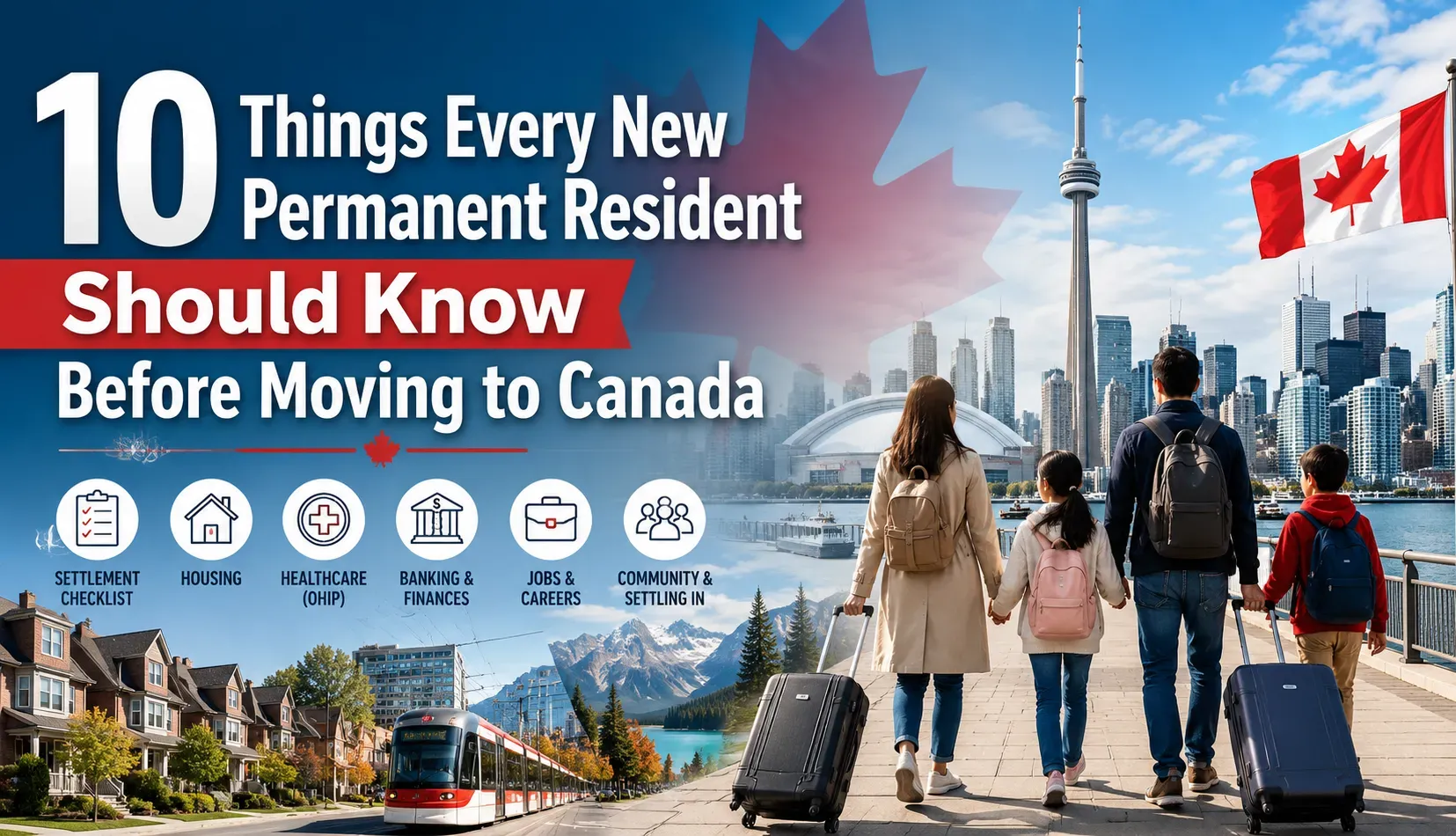

10 Things Every New Permanent Resident Should Know Before Moving to Canada
Moving to Canada is an exciting milestone. Receiving Permanent Residency in Canada opens the door to new opportunities, a high quality of life, and a welcoming multicultural society. However, relocating to a new country also comes with challenges and responsibilities.
If you have recently received your Canada Permanent Resident Visa, it is important to prepare properly before your move. Understanding what to expect can help you settle faster and avoid common mistakes.
In this guide, we will discuss 10 important things every newcomer should know before moving to Canada.
1. Understand Your Permanent Resident Rights and Responsibilities
Before you arrive, take time to learn about your rights and obligations as a permanent resident.
With Permanent Residency in Canada, you can:
- Live, work, and study anywhere in Canada
- Access most social benefits
- Receive healthcare coverage after meeting provincial requirements
- Apply for Canadian citizenship when eligible
However, you must also maintain your residency status. To keep your Permanent Residency in Canada, you generally need to be physically present in Canada for at least 730 days within a five-year period.
Understanding these requirements will help you protect your status in the long term.
2. Keep Your Important Documents Ready
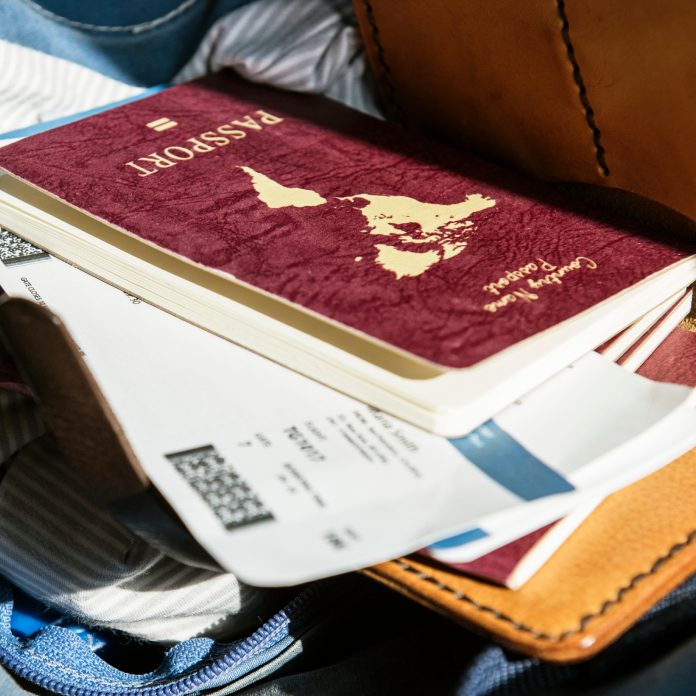
After receiving your Canada Permanent Resident Visa, gather all important documents before travelling.
These may include:
- Passport
- Confirmation of Permanent Residence (COPR)
- Educational certificates
- Birth certificates
- Marriage certificates
- Medical records
- Employment references
Keep both physical and digital copies. Having these documents readily available will make your settlement process much easier.
3. Research the Province and City You Are Moving To
Canada is a large country with different climates, job markets, and living costs.
Before using your Canada Permanent Resident Visa, research:
Housing Costs
Rental prices vary significantly across cities. Toronto and Vancouver are generally more expensive than cities like Winnipeg, Edmonton, or Halifax.
Job Opportunities
Some provinces have stronger demand in specific industries such as healthcare, construction, technology, and transportation.
Weather Conditions
Canadian winters can be very cold depending on the region. Understanding the climate will help you prepare properly.
Choosing the right location can greatly improve your experience with Permanent Residency in Canada.
4. Prepare Your Finances Before Arrival
Moving expenses can add up quickly.
Before relocating, create a budget that includes:
- Airfare
- Temporary accommodation
- Rental deposits
- Transportation
- Groceries
- Utilities
- Winter clothing
Many newcomers arrive with a Canada Permanent Resident Visa but underestimate their initial costs. Having sufficient savings can reduce financial stress during your first few months.
It is also a good idea to open a Canadian bank account soon after arrival.
5. Learn About Canada’s Healthcare System
Canada offers publicly funded healthcare, but coverage varies by province.
Many provinces have a waiting period before new residents can access healthcare services.
If you have recently received Permanent Residency in Canada, consider purchasing private health insurance to cover the waiting period.
Research the healthcare rules in your destination province before moving.
Understanding the healthcare system early can help you avoid unexpected medical expenses.
6. Start Building Your Canadian Credit History
Credit history plays an important role in Canada.
Landlords, lenders, and financial institutions often review your credit score when you:
- Rent a home
- Apply for a credit card
- Get a loan
- Finance a vehicle
After arriving with your Canada Permanent Resident Visa, consider applying for a newcomer credit card through a Canadian bank.
Use it responsibly and pay bills on time. Building good credit early can make your financial life much easier.
7. Prepare for the Canadian Job Market
Finding employment may take time, even for skilled professionals.
Before arriving, update your:
- Resume
- LinkedIn profile
- Professional certifications
- Reference letters
Canadian employers often prefer resumes tailored to local standards.
Many people who obtain Permanent Residency in Canada begin networking even before they arrive. Joining professional associations and online industry groups can increase your chances of finding suitable employment.
Consider Credential Recognition
Certain professions require licensing in Canada.
Examples include:
- Doctors
- Nurses
- Engineers
- Accountants
- Teachers
Research licensing requirements before relocating.
8. Arrange Temporary Accommodation
It is often easier to find permanent housing after arriving in Canada.
Many newcomers use temporary accommodation such as:
- Hotels
- Short-term rentals
- Extended-stay apartments
After activating your Canada Permanent Resident Visa, you can spend time exploring neighbourhoods before committing to a long-term lease.
This approach allows you to make a more informed housing decision.
9. Understand Canadian Culture and Everyday Life
Canada is known for its diversity, respect, and inclusiveness.
Learning about Canadian culture can help you integrate more smoothly.
Important Cultural Values
- Respect for diversity
- Equality
- Punctuality
- Politeness
- Community involvement
People with Permanent Residency in Canada often find that participating in local activities helps them build friendships and professional connections.
Joining community groups, volunteer programs, and newcomer organizations can make your transition easier.
Improve Language Skills
Strong English or French communication skills can improve employment opportunities and daily interactions.
Consider language classes if needed.
10. Plan for Long-Term Success
Receiving a Canada Permanent Resident Visa is only the beginning of your journey.
Think about your long-term goals:
Career Growth
Identify training programs and certifications that can improve your employment prospects.
Home Ownership
Many newcomers eventually purchase homes after establishing stable employment and credit history.
Canadian Citizenship
One of the biggest benefits of Permanent Residency in Canada is the opportunity to become a Canadian citizen in the future.
Understanding citizenship requirements early can help you plan ahead.
Common Settlement Resources for Newcomers
Several organizations provide free support to newcomers.
These services may include:
- Employment assistance
- Language training
- Settlement counselling
- Housing guidance
- Community integration programs
New residents who arrive with a Canada Permanent Resident Visa should take advantage of these resources to make their transition smoother.
Final Thoughts
Moving to a new country can feel overwhelming, but proper preparation can make the process much easier. Understanding housing, healthcare, employment, finances, and cultural expectations will help you settle successfully and enjoy the benefits of Permanent Residency in Canada.
Whether you have just received your Canada Permanent Resident Visa or are preparing for your move, taking the time to plan ahead can help you build a successful future in Canada.
At ZF Canada, we understand the challenges newcomers face and are committed to helping individuals and families navigate their Canadian immigration journey with confidence.






Leave A Comment
You must be <a href="https://zfcanada.com/wp-login.php?redirect_to=https%3A%2F%2Fzfcanada.com%2F2026%2F06%2F22%2Fcanada-permanent-resident-tips%2F">logged in</a> to post a comment.